
What is a Workout Progress Tracker?
A workout progress tracker is a tool designed to help you record and monitor your fitness activities over time. Instead of relying on your memory, you can log important workout information such as:
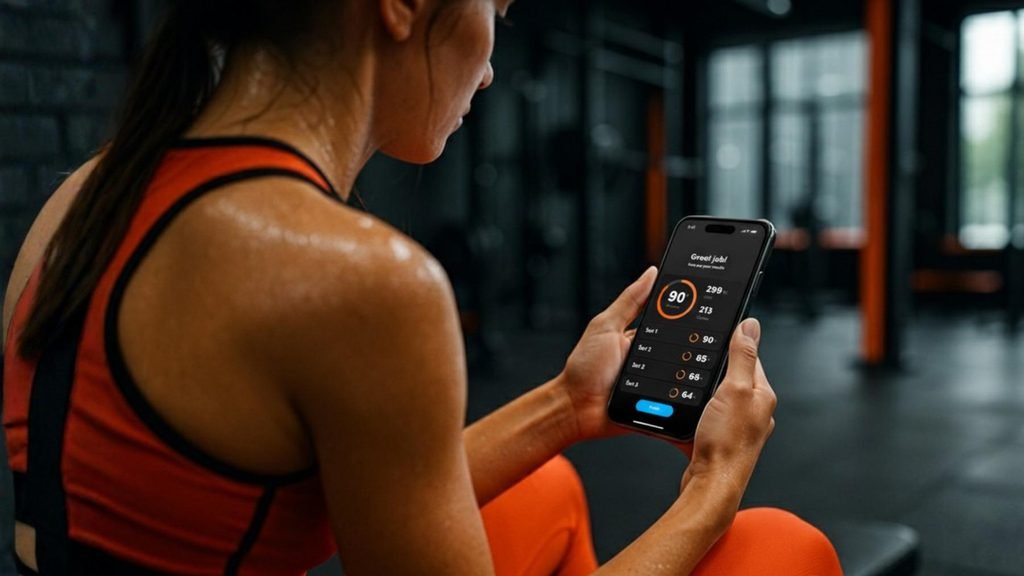
What’s it Tracks?
- Exercises completed
- Number of sets and repetitions
- Weights used
- Workout duration
- Steps completed
- Distance travelled
- Calories burned
- Heart rate
- Running or walking activity
- Personal records
- Workout frequency epetitions
By consistently recording this information, you can clearly see how your performance has improved, helping you stay motivated and focused on your fitness journey.
Can You Track Workouts on Your Phone?
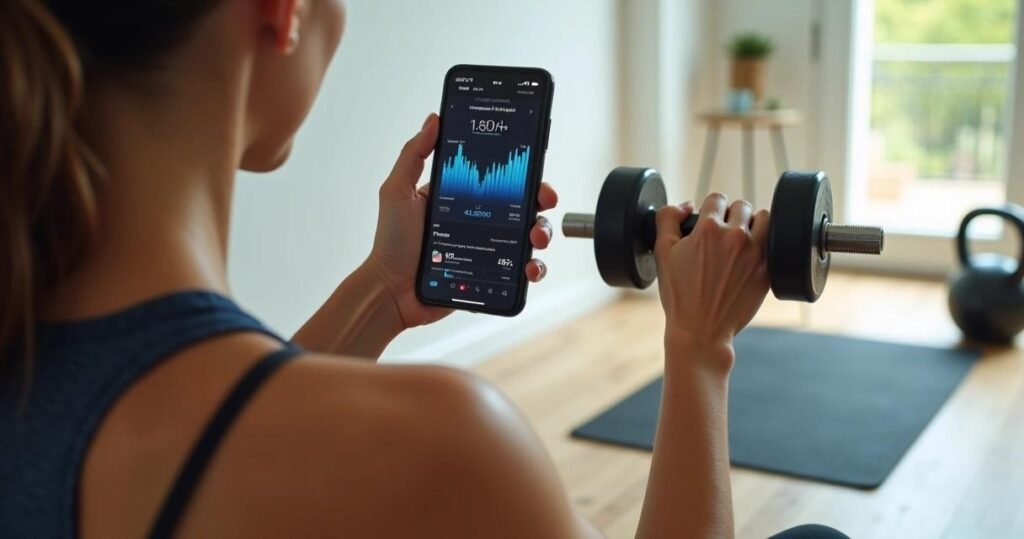
Absolutely! Modern smartphones can be used to track many types of fitness activities. Depending on your phone, the fitness app you choose, or any connected wearable device, you may be able to monitor activities like walking, running, cycling, strength training, and other workouts.
Yes, you can track your workouts on a phone. In fact, your smartphone can become a useful fitness companion for recording exercises, monitoring activity, setting goals, and understanding your progress over time.
Whether you are trying to lose weight, build muscle, improve strength, increase endurance, or stay active, using a workout progress tracker can boost your confidence by showing how your fitness is improving over time. This can inspire you to keep going and stay committed.
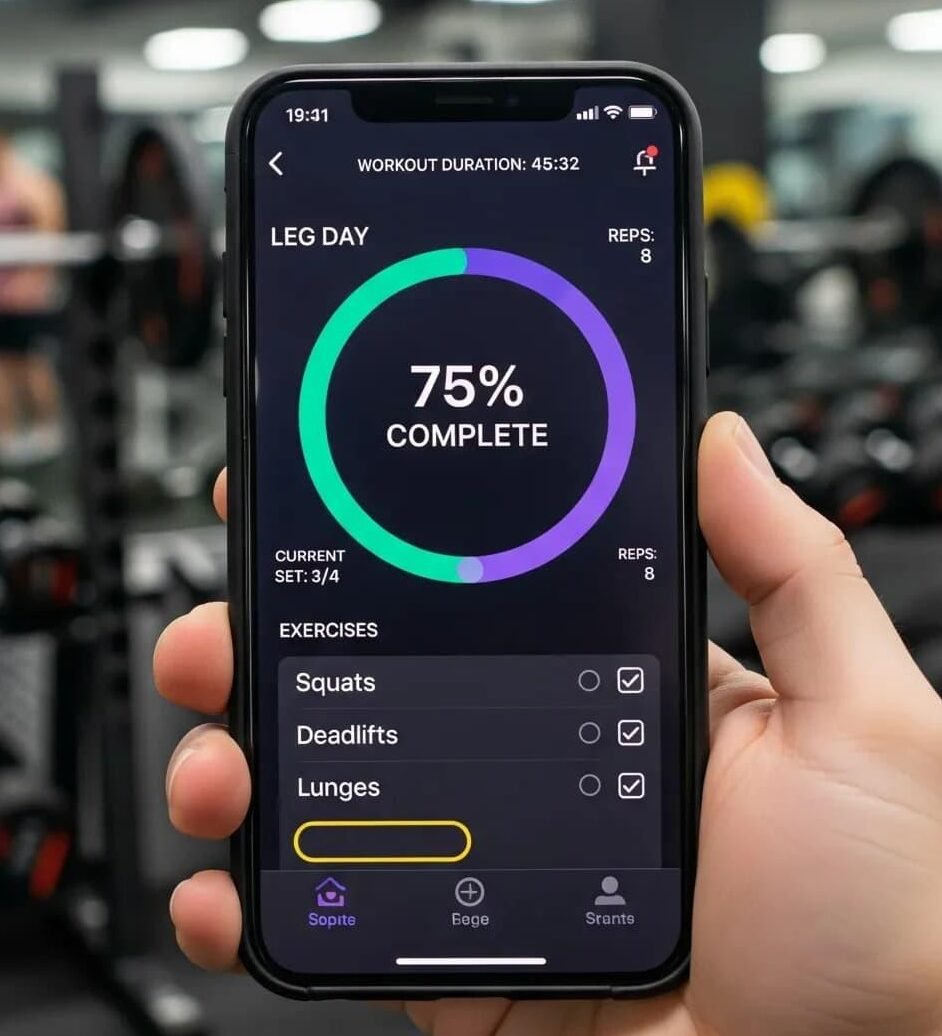
Depending on your phone, fitness app, smartwatch, or connected wearable device, selecting the right tool can make tracking more accurate and motivating, encouraging you to stay consistent.
How Does a Mobile Workout Tracker Work?
A mobile workout tracker generally works by allowing you to enter or automatically collect information about your activity. If you encounter issues like inaccurate data or app crashes, consult the app’s help section or update your device software to ensure smooth tracking and continuous motivation.
For example,
| Exercise: | strength-training session, you might record: | Heart Rate |
| Squats | Sets: 3 Repetitions: 12 Weight: 20 kg Duration: 15 minutes | Based on a connected device |
| walking or running | Distance: 4 km Duration: 35 minutes Steps: 5,500 | Based on a connected device |
Over several weeks, these records can help you identify patterns and measure your progress.
Why Use a Workout Progress Tracker?
One of the biggest challenges in fitness is staying consistent.
You may exercise regularly but still wonder:
- Am I getting stronger?
- Am I exercising consistently?
- Am I improving my endurance?
- Am I progressing toward my goal?
- How much weight am I lifting compared with last month?
- How many workouts did I complete this week?
A workout progress tracker can help answer these questions by organizing your workout information, making you feel motivated and committed to your fitness journey.
1. Track Your Workout History
Your workout history provides a record of what you have completed.
Instead of guessing how often you trained, you can look at your previous sessions and understand your routine.
2. Measure Your Progress
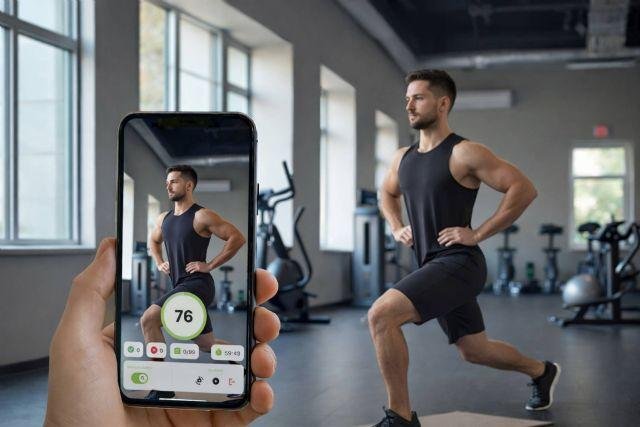
Progress isn’t always visible in the mirror.
You might improve your strength, endurance, workout duration, repetitions, or consistency before seeing major physical changes.
Tracking these measurements gives you additional ways to recognize your progress.
3. Stay Consistent
When workouts are recorded, it becomes easier to see whether you are maintaining your routine.
You can review your weekly activity and identify where you may need to improve your consistency.
A tracker can help you create measurable goals, giving you a sense of control and purpose in your fitness journey. A tracker can help you create measurable goals.
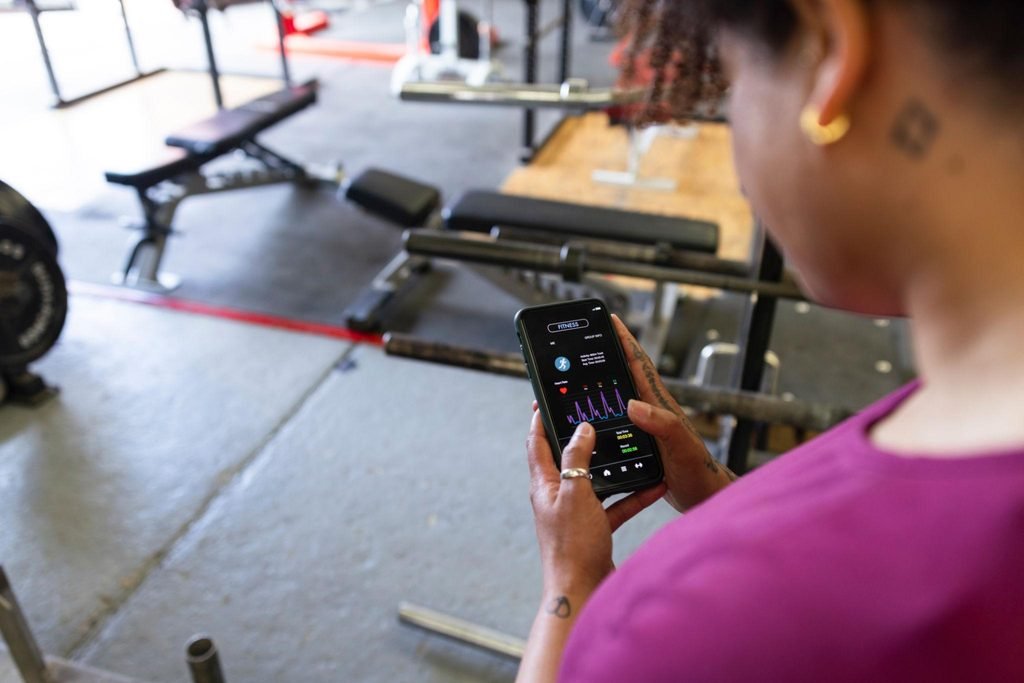
For example:
- Complete 4 workouts per week
- Walk 8,000 steps per day
- Run 5 km
- Increase squat weight
- Improve workout duration
- Complete a specific fitness program
Breaking larger fitness goals into smaller, measurable targets simplifies tracking progress and keeps you motivated as you see steady achievements.
5. Understand Your Performance
Tracking your workouts over time can reveal patterns.
For example, you may discover that your strength improves when you follow a consistent training schedule or that your running distance has gradually increased.
What Can You Track on a Phone?
The exact features depend on the app and device you use, but a fitness tracking system can include several useful measurements.
Steps
Your phone can often count daily steps and help you understand your overall activity level.
Distance
Walking, running, and cycling activities can be tracked by distance when location tracking is available.
Workout Duration
Recording how long you exercise helps you understand the amount of time you dedicate to training.
Heart Rate
A compatible smartwatch or fitness wearable can provide heart-rate information during exercise.
Strength Training
For gym workouts, you can record exercises, sets, repetitions, and weights.
Running
Runners can track distance, duration, pace, and other performance measurements using compatible fitness apps and devices.
Workout Frequency
A tracker can help you see how often you exercise each week or month.
How to Use a Workout Progress Tracker Effectively
Simply recording workouts is not enough. The most useful approach is to track your activities consistently.
Step 1: Choose Your Fitness Goal
Start by identifying what you want to achieve.
Your goal might be:
Weight Loss → focus on consistent activity and workouts.
Muscle Building → monitor strength-training exercises, sets, repetitions, and weights.
Improved Fitness → track workout frequency, duration, and performance.
Running → monitor distance, duration, pace, and consistency.
Step 2: Record Your Starting Point
Before beginning a new fitness routine, record your baseline.
Depending on your goal, this could include workout performance, body measurements, running distance, repetitions, or other relevant metrics.
Your starting point gives you something to compare against later.
Step 3: Track Each Workout
After every workout, record the important details.
Try to keep your information consistent so that you can make meaningful comparisons over time.
Step 4: Review Your Progress
Don’t only look at your tracker every day.
Review your progress weekly or monthly to identify longer-term trends.
Ask yourself:
What improved?
What stayed the same?
Where can I improve?
Step 5: Adjust Your Routine
Your workout data can help you and your trainer understand when your routine may need adjustment.
Progress should be gradual and appropriate for your individual fitness level.
Phone Tracking vs. Smartwatch Tracking
A smartphone can be enough for many basic workout progress tracker needs.
However, a smartwatch or fitness wearable can provide additional information during exercise because it is worn on your body.
FeatureS/Wearable
| Features | Smartphone | Smartwatch |
| Steps | ✓ | ✓ |
| Workout duration | ✓ | ✓ |
| Distance | ✓ | ✓ |
| Workout history | ✓ | ✓ |
| Heart-rate monitoring | Depends on device/app Often available | Depends on device/app Often available |
| Real-time workout data | Depends on device on app Often available | Depends on device on app Often available on mobile ✓ |
| GPS tracking | ✓ | Often available |
| Exercise logging | ✓ | ✓ |
You don’t necessarily need an expensive device to begin tracking your workouts. A phone-based workout progress tracker can be a practical starting point.
Is Workout Tracker Useful for Beginners?
Yes.
Beginners can particularly benefit from tracking because it creates awareness about exercise consistency and progress.
Instead of focusing only on how your body looks, you can monitor measurable improvements such as:
- More repetitions
- Longer workouts
- Increased walking distance
- Improved consistency
- Increased strength
- Better workout completion rates
Small improvements can add up over time.
Use Fitness Flow to Track Your Progress
At Fitness Flow, the goal is to make your fitness journey more structured, measurable, and easier to follow.
A workout progress tracker can help you keep your activities organized while giving you a clearer picture of your fitness journey.
Whether your goal is to lose weight, build muscle, get stronger, or move better, tracking your workouts can help you stay aware of your progress.
Explore your fitness journey with Fitness Flow and make every workout count.
Ready to build your strongest self?
Start tracking. Stay consistent. Keep progressing.
Final Thoughts
You don’t need complicated equipment to start monitoring your workouts. Your smartphone can be a convenient tool for recording workouts, tracking activity, setting goals, and reviewing your progress.
The most important part is consistency.
A workout progress tracker can show you where you started, what you have accomplished, and how your performance changes over time.
Remember that fitness progress is different for everyone. Focus on building sustainable habits, follow a suitable training program, and use your workout data as a tool to understand your journey.
Start today. Track your workout. Measure your progress. Build your strongest self with Fitness Flow.
Frequently Asked Questions
Can I track my workout using my phone?
Yes. Smartphones can be used to record workouts, steps, distance, duration, and other fitness activities through compatible apps and connected devices.
What is the best way to track workout progress?
The best approach is to consistently record measurements relevant to your goal, such as exercises, sets, repetitions, weights, duration, distance, or workout frequency, and review them regularly.
Do I need a smartwatch to track my workouts?
No. A smartphone can provide many basic workout-tracking functions. A smartwatch or fitness wearable can provide additional measurements depending on the device.
Can a workout progress tracker help with weight loss?
A tracker can help you monitor activity and workout consistency. However, weight management depends on several factors, including nutrition, activity, sleep, and individual circumstances.
How often should I check my workout progress tracker?
You can record each workout, but review your overall progress weekly or monthly. Looking at longer-term trends can provide a better picture than focusing on a single workout.
Can I track strength training on my phone?
Yes. Many workout-tracking apps allow you to record exercises, sets, repetitions, weights, and workout duration.
Fitness Flow — Build Your Strongest Self.